Get to know the castle
Castle at a glance
- Site & layout
- Hilltop-and-lowland castle with earthen defences
- Origins
- Medieval predecessor; early-modern construction from 1611
- Builders & patrons
- Doi Toshikatsu and successive lords
- Other names
- —
- What remains today
- Dry and wet moats, banks and keep site
THE STORY
The story behind the walls
An earlier medieval site was developed into a major castle by Doi Toshikatsu. Work began in 1611, and prominent hereditary Tokugawa retainers became its lords. Some, including Hotta Masayoshi, held senior offices in the shogunate. Military use after the Edo period removed most buildings, while postwar work created the historic park.
LAYOUT & ARCHITECTURE
Read the landscape and the buildings.
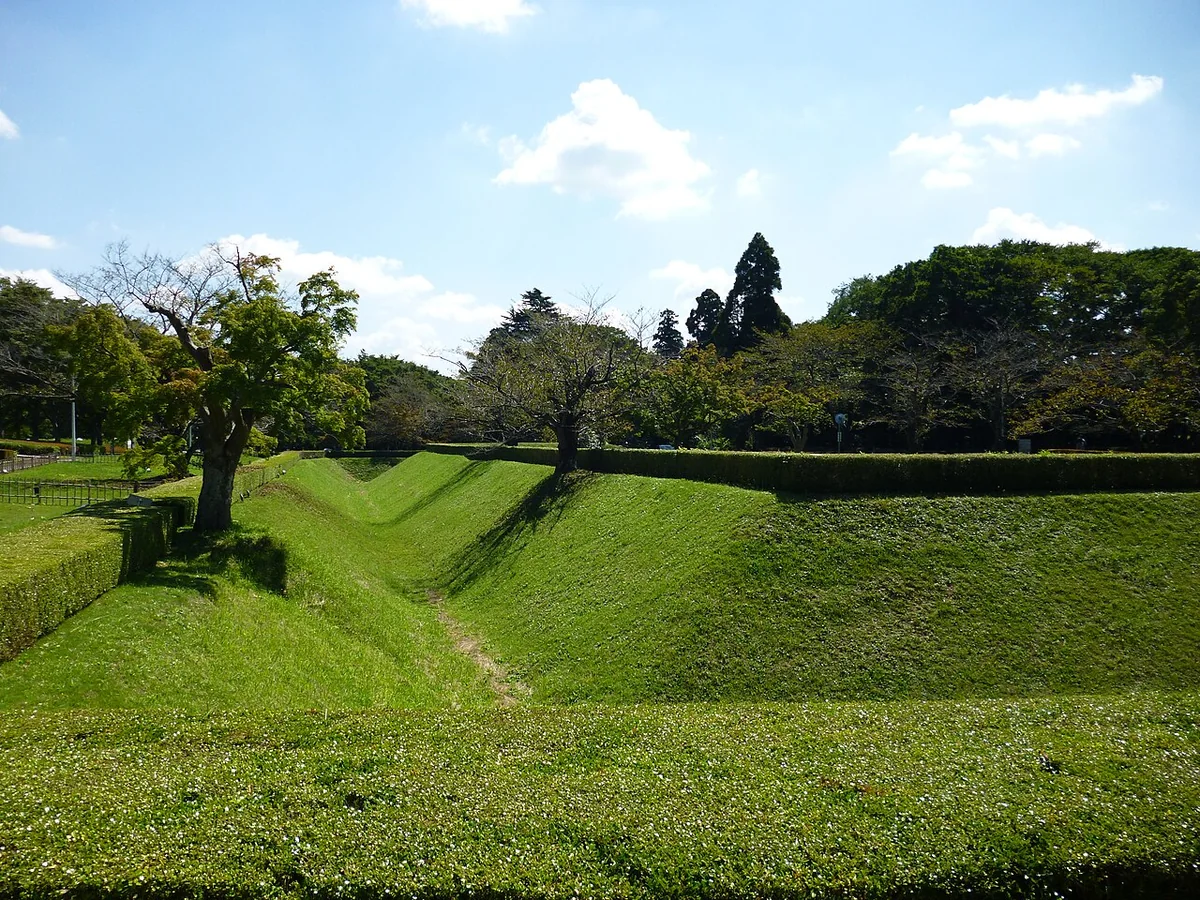
The castle occupies a plateau projecting into surrounding lowlands. Wet and dry moats and earthen banks protected it, while residences and town areas extended eastward. Changes in level and enclosure boundaries now convey much of its structure.
A CLOSER LOOK
Details worth a closer look.
Ditch around the forward enclosure
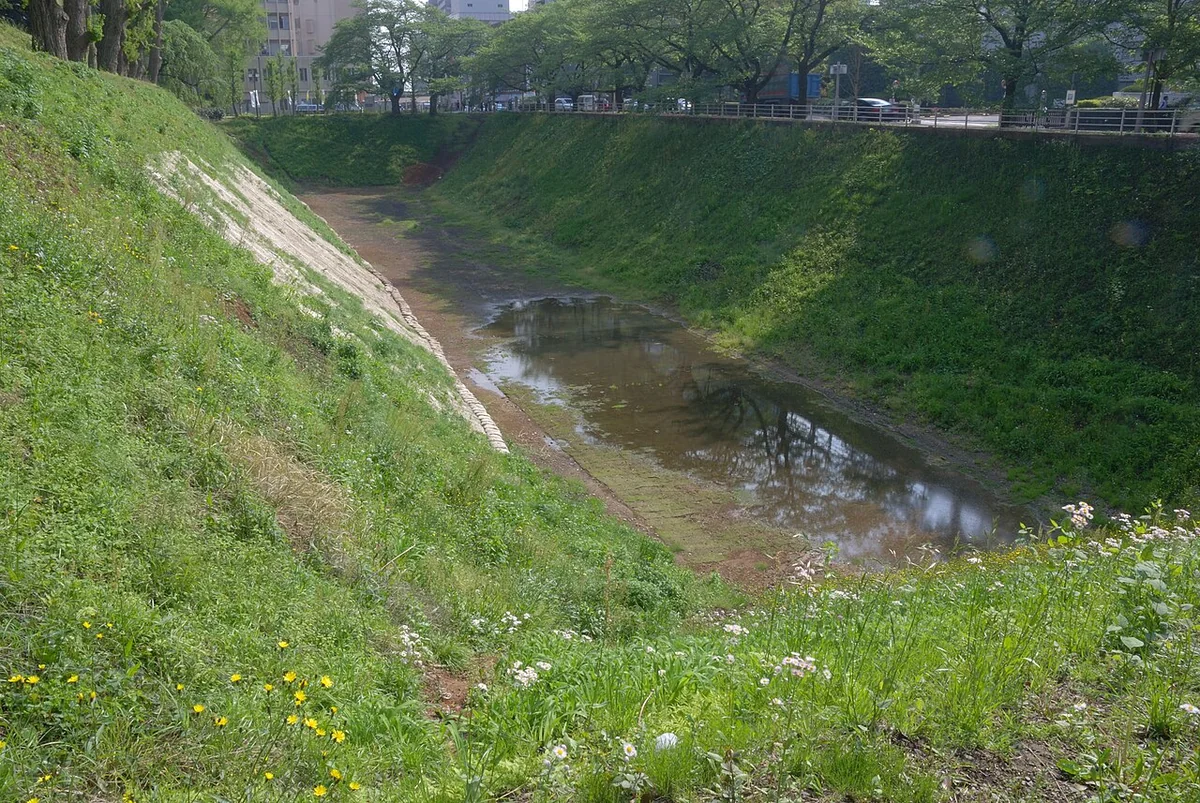
A substantial dry moat is associated with an enclosure defending the entrance. Observe its depth and direction from the designated paths.
Main enclosure and keep site
No keep building survives, but its site and the main enclosure remain legible. The banks outline the scale of the castle’s core.
Wet moats and outer defences
The southern and western outer enclosures relate to wet moats and low ground. They allow comparison with the dry-moat defences elsewhere in the castle.
THROUGH THE YEARS
A short timeline
- 1611
Construction began under Doi Toshikatsu.
- Meiji period
Military use led to removal of most gates and turrets.
- From 1979
Major park improvements began.
BEFORE YOU GO
A note before you go.
Some areas of the park are restricted. Check Sakura City’s current map and confirm opening arrangements for the park centre and neighbouring museum separately.
Information checked: 27 September 2026
Sources & official information
Some official sources are available in Japanese only.