Get to know the castle
Castle at a glance
- Site & layout
- Shogunal castle remains in the Imperial Palace East Gardens
- Origins
- Medieval origin; extensively developed in the Edo period
- Builders & patrons
- Tokugawa shoguns
- Other names
- —
- What remains today
- Keep platform, masonry and gates; no keep survives
THE STORY
The story behind the walls
Edo Castle was greatly developed as the seat of the Tokugawa shoguns. Three successive keeps were built in the early Edo period, the last completed under Iemitsu in 1638. The 1657 Meireki fire destroyed it, and only its platform was rebuilt. The East Gardens, created from part of the former castle, opened to the public in 1968.
LAYOUT & ARCHITECTURE
Read the landscape and the buildings.
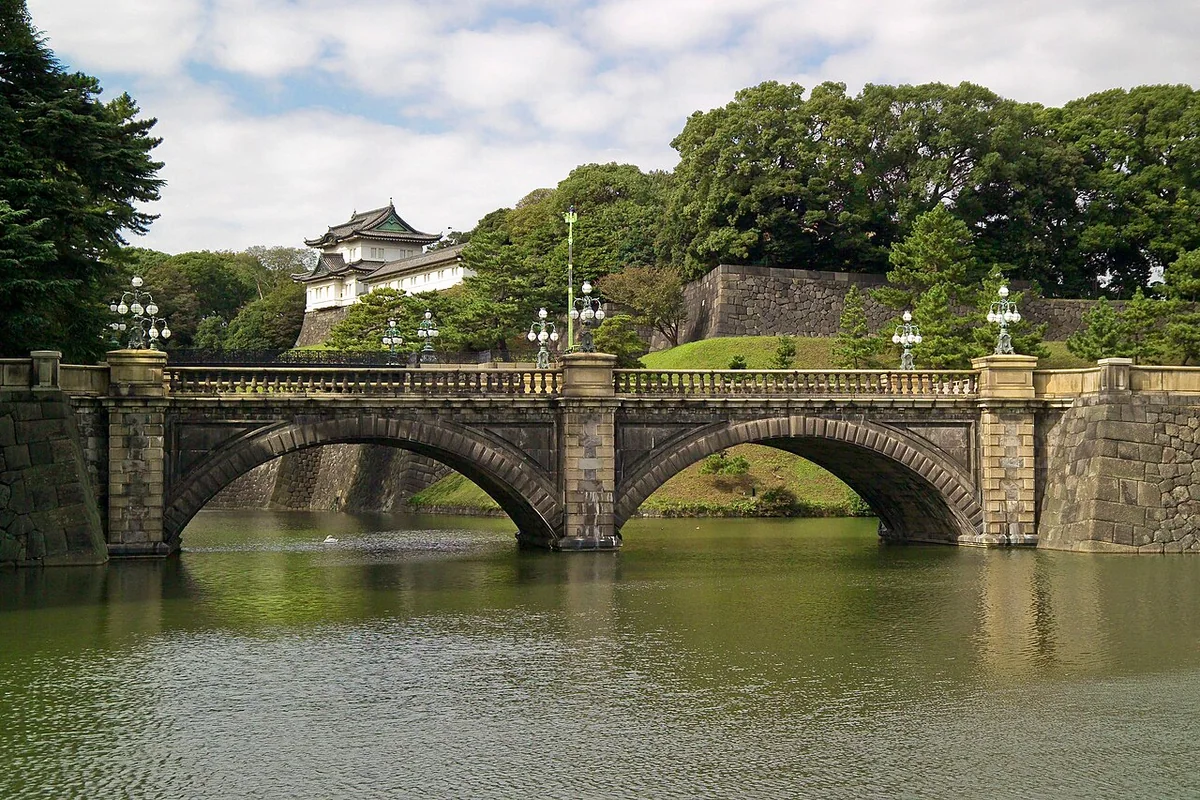
Large walls and controlled gateways separate the principal enclosures. The keep platform indicates the scale of the lost tower. The public East Gardens cover only part of former Edo Castle and part of today’s Imperial Palace grounds.
A CLOSER LOOK
Details worth a closer look.
Keep platform
The platform was rebuilt after the fire of 1657, but no new keep followed. Its empty summit marks an important change in the castle’s history.
Gates and masonry
Castle gates and large walls define entrances and enclosure boundaries. Changes in level and turning approaches give context to the landscaped grounds.
From inner castle to garden
The East Gardens include parts of the former main, second and third enclosures. Their combination of castle terrain and later gardens shows how the site changed.
THROUGH THE YEARS
A short timeline
- 1638
Tokugawa Iemitsu’s keep was completed.
- 1657
The Meireki fire destroyed the keep.
- 1968
The Imperial Palace East Gardens opened.
BEFORE YOU GO
A note before you go.
The East Gardens have closing days and entry hours that may change for events. They do not provide unrestricted access to the Imperial Palace; check the Imperial Household Agency’s current guidance.
Information checked: 27 September 2026
Sources & official information
- Imperial Household Agency: Historic structures and gardens ↗
- Imperial Household Agency: East Gardens ↗
Some official sources are available in Japanese only.