Get to know the castle
Castle at a glance
- Site & layout
- Flatland castle with an original keep
- Origins
- Main keep and early buildings dated by research to c. 1593–1594
- Builders & patrons
- Ishikawa Kazumasa and Yasunaga; additions under later lords
- Other names
- Developed from Fukashi Castle
- What remains today
- Five National Treasure keep-complex buildings, moats and walls
THE STORY
The story behind the walls
The site developed from Sengoku-period Fukashi Castle. Under Ishikawa Kazumasa and Yasunaga in the late sixteenth century, the castle and keep complex took their later form. Research places construction of the main keep and associated early structures around 1593–1594. Edo-period additions included the attached and Moon-viewing turrets, creating the surviving National Treasure group.
LAYOUT & ARCHITECTURE
Read the landscape and the buildings.
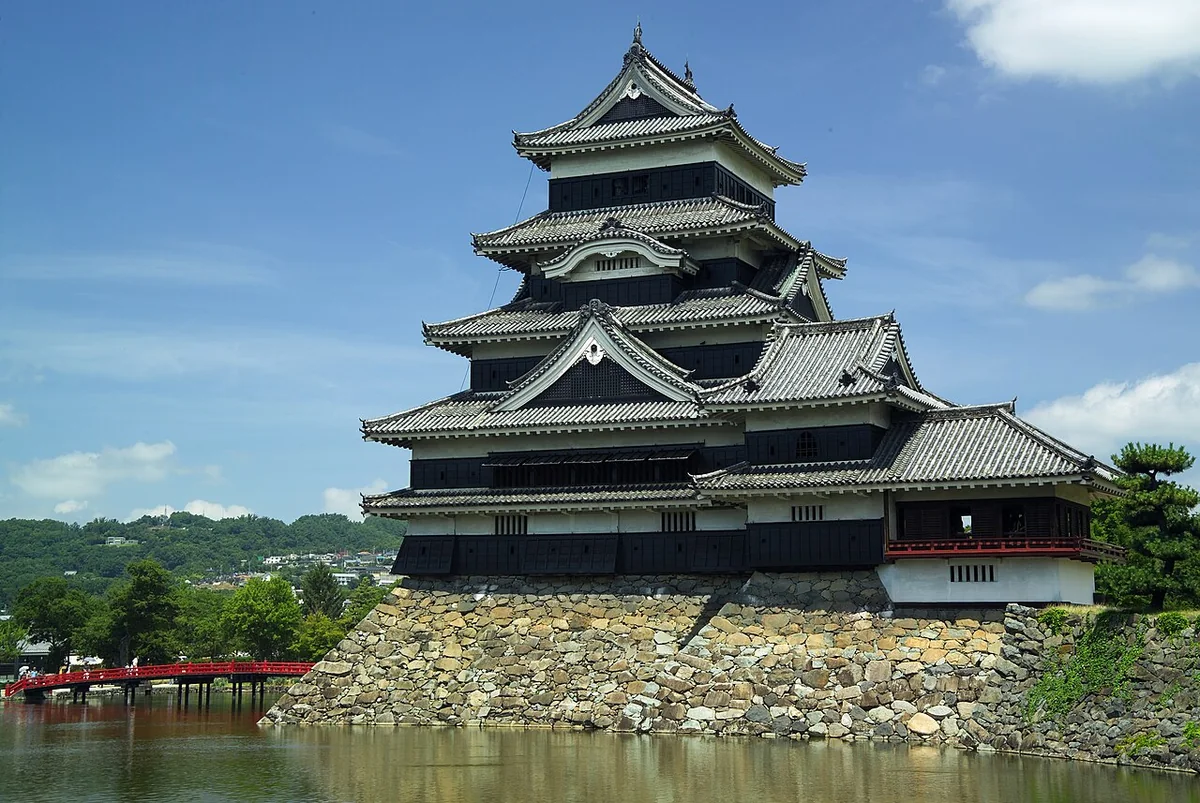
The connected keep complex stands on masonry beside a moat in a flatland setting. Understanding five external tiers and six internal floors is a first step to reading the structure. Defensive early buildings and more open later additions can be compared in one ensemble.
A CLOSER LOOK
Details worth a closer look.
Five roof tiers, six floors
The visible roof tiers do not equal the number of internal floors. Knowing that the main keep has five tiers and six storeys changes how its exterior is read.
Five connected buildings
The main keep, smaller tower, connecting structure, attached turret and Moon-viewing Turret form one group. It is an interconnected complex rather than a single isolated tower.
Moon-viewing Turret
The later Moon-viewing Turret differs from the defensive keep. Its more open design reflects a different purpose and a more settled age.
THROUGH THE YEARS
A short timeline
- 16th century
Fukashi developed into Matsumoto Castle.
- c. 1593–1594
Research-based date for the main keep and early structures.
- Edo period
The attached and Moon-viewing turrets were added.
BEFORE YOU GO
A note before you go.
The historic wooden interior involves climbing stairs. Check the official castle site for admission procedures, queue information, prices and access changes.
Information checked: 27 September 2026
Sources & official information
- Matsumoto Castle: Keep complex ↗
- Matsumoto Castle: Construction-date research ↗
- Matsumoto Castle: Visitor information ↗
Some official sources are available in Japanese only.