Get to know the castle
Castle at a glance
- Site & layout
- Earth-built mountain castle ruins
- Origins
- Foundation unknown; first documented in 1513
- Builders & patrons
- Nagao-Uesugi and Hori families
- Other names
- Hachigamine Castle
- What remains today
- Terraces, ditches, banks and outer perimeter; reconstructed features in the lower park
THE STORY
The story behind the walls
The foundation is uncertain, but a document of 1513 shows that a mountain castle already existed. It is thought to have expanded greatly under Kenshin, Kagekatsu and then the Hori. The Hori followed the Uesugi transfer to Aizu in 1598. Construction of Fukushima Castle in 1607 marked the movement of the regional centre to the lowlands.
LAYOUT & ARCHITECTURE
Read the landscape and the buildings.
This is a castle of levelled terraces, dry moats and banks, rather than stone walls and a keep. Its layout suggests expansion from a small summit stronghold to larger southern enclosures, residences and a lower perimeter. The continuous remains illustrate changing castle-building practice.
A CLOSER LOOK
Details worth a closer look.
Enclosures down the mountain
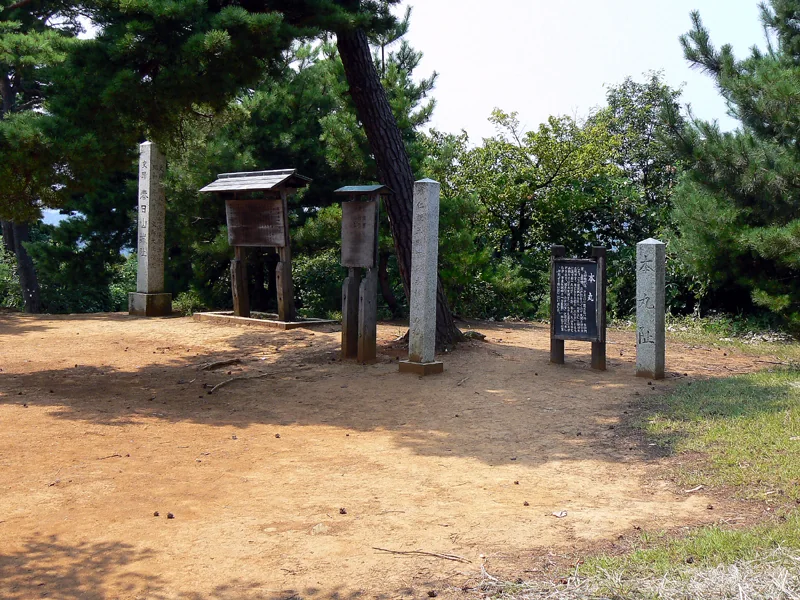
Groups of enclosures continue from the summit down the slopes. Contrasts between level terraces and steep ground help explain the castle.
Lower defensive perimeter
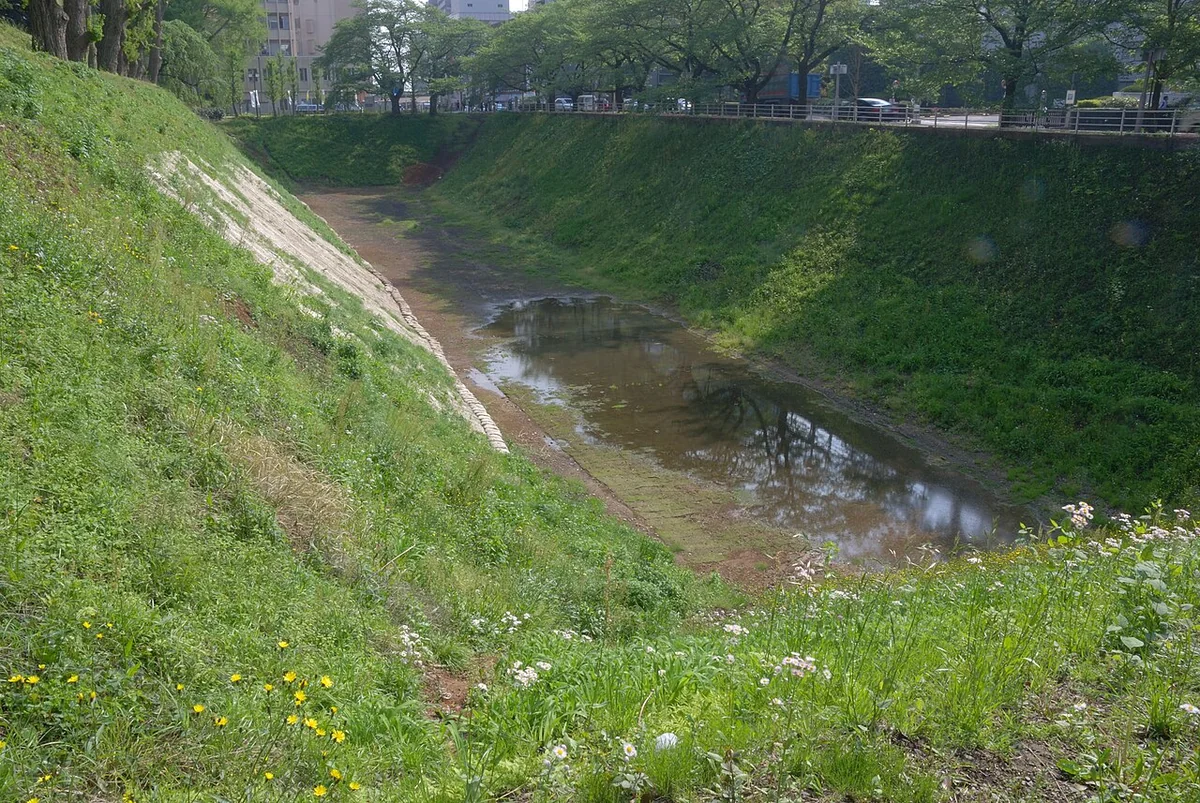
Ditches and banks enclosed residences at the foot of the mountain. The castle included government and living areas as well as an upper stronghold.
Archaeological park
The lower historic park reconstructs excavated ditches, banks and buildings. It helps explain uses of the foothill area that are less obvious on mountain paths.
THROUGH THE YEARS
A short timeline
- 1513
The castle appears in a surviving document.
- 1598
The Hori followed the Uesugi transfer to Aizu.
- 1607
The Hori built Fukushima Castle.
BEFORE YOU GO
A note before you go.
Check Joetsu City for trail conditions and restricted areas, including weather and wildlife notices. Confirm opening days at the lower park’s visitor museum separately.
Information checked: 27 September 2026
Sources & official information
- Joetsu City: Kasugayama Castle ↗
- Joetsu City: Conserving an earth-built castle ↗
- Joetsu City: Lower archaeological park ↗
- Joetsu City: Fukushima Castle ↗
Some official sources are available in Japanese only.