Get to know the castle
Castle at a glance
- Site & layout
- Large concentric flatland castle ruins
- Origins
- Traditional fourteenth-century origin; expanded in the sixteenth–seventeenth centuries
- Builders & patrons
- Traditionally Shiba Kaneyori; developed by Mogami Yoshiaki, Torii Tadamasa and others
- Other names
- Kajo
- What remains today
- Moats, banks and masonry; gates reconstructed
THE STORY
The story behind the walls
Its origins are traditionally linked to Shiba Kaneyori in the fourteenth century. Mogami Yoshiaki greatly developed the castle and its broad enclosures. Further alterations followed under Torii Tadamasa after the Mogami lost the domain. The site became Kajo Park, where projects such as the 1991 gate reconstruction interpret parts of the former castle.
LAYOUT & ARCHITECTURE
Read the landscape and the buildings.
The inner enclosure was surrounded by a second and third enclosure in a large concentric plan. Three lines of moats and banks divided the flat ground. Much of the outer castle lies beyond today’s park in the surrounding town.
A CLOSER LOOK
Details worth a closer look.
Second-enclosure moat
The long moat and banks convey the scale of the castle. Following their direction gives context to the gates.
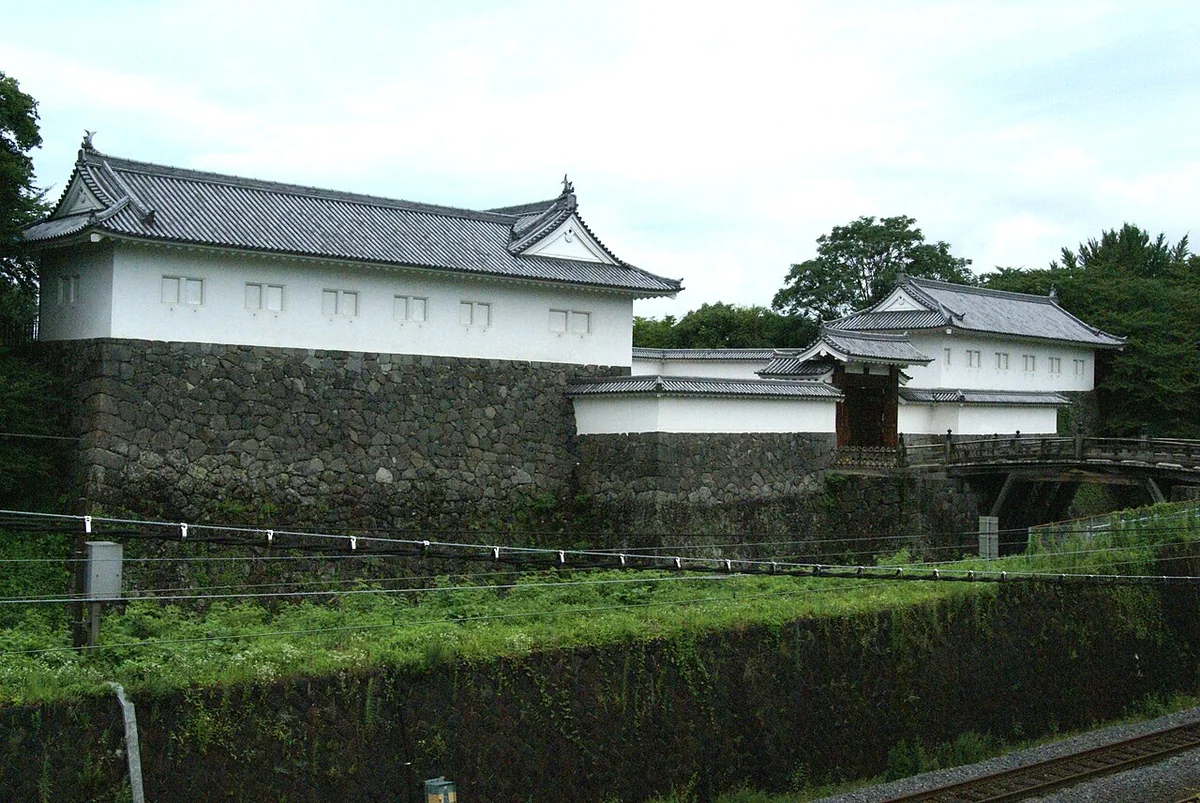
East Ote Gate
The reconstructed wooden gate marks the formal approach to the second enclosure. Walking through it helps explain how an entrance controlled movement.
Approach to the main enclosure
The Ichimonji Gate area explains the relationship between the main and second enclosures. Compare reconstructed elements with surviving landforms and moats.
THROUGH THE YEARS
A short timeline
- 14th century
Traditional foundation by Shiba Kaneyori.
- 16th–17th centuries
Mogami and Torii rulers expanded and altered the castle.
- 1991
East Ote Gate was reconstructed.
BEFORE YOU GO
A note before you go.
Access to the main enclosure and gate interiors varies. Check Yamagata City’s castle information for current openings and conservation work.
Information checked: 27 September 2026
Sources & official information
Some official sources are available in Japanese only.