Get to know the castle
Castle at a glance
- Site & layout
- Ancient mountain fortress
- Origins
- Estimated later seventh century; exact year unknown
- Builders & patrons
- The person who commissioned construction is not established
- Other names
- Castle ruins on Mount Kinojo
- What remains today
- Walls, gate remains, water gates and building foundations; West Gate and some other features are interpreted reconstructions
THE STORY
The story behind the walls
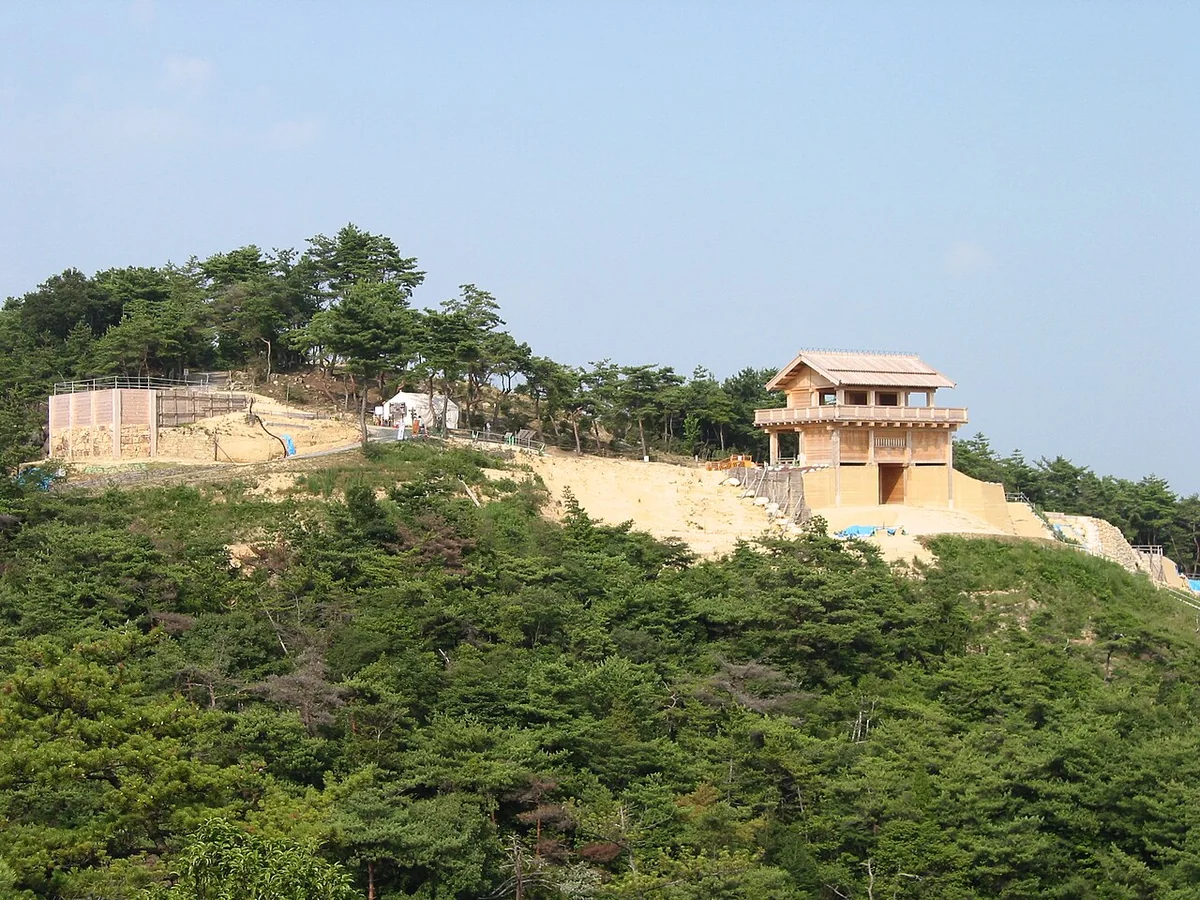
Kinojo is absent from the official ancient chronicles, leaving important questions about its construction unresolved. Archaeological evidence suggests a date in the later seventh century. It is often connected with defensive preparations after the Battle of Baekgang in 663, but neither an exact construction year nor a commissioning ruler is established. Stone alignments attracted attention in 1970, and later investigations identified gates, water gates and building remains. An interpreted reconstruction of the West Gate was completed in 2004 as part of work to explain the ancient fortress.
LAYOUT & ARCHITECTURE
Read the landscape and the buildings.
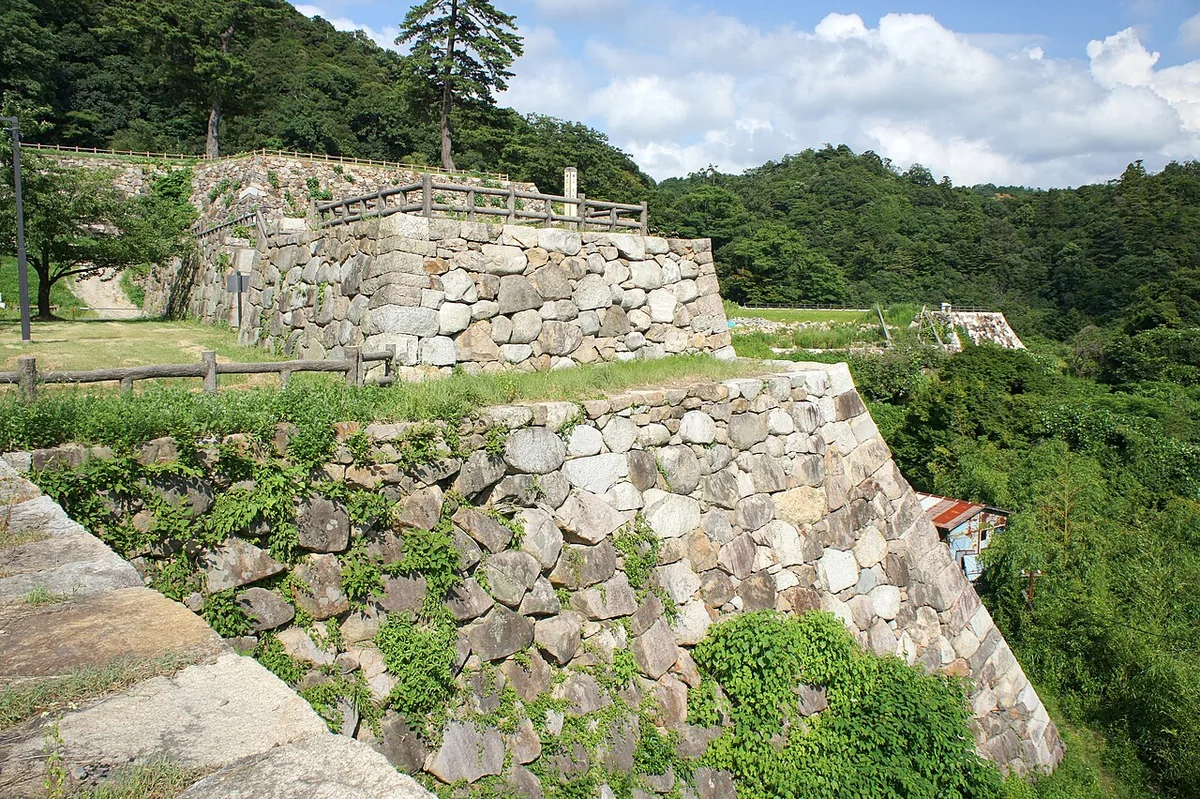
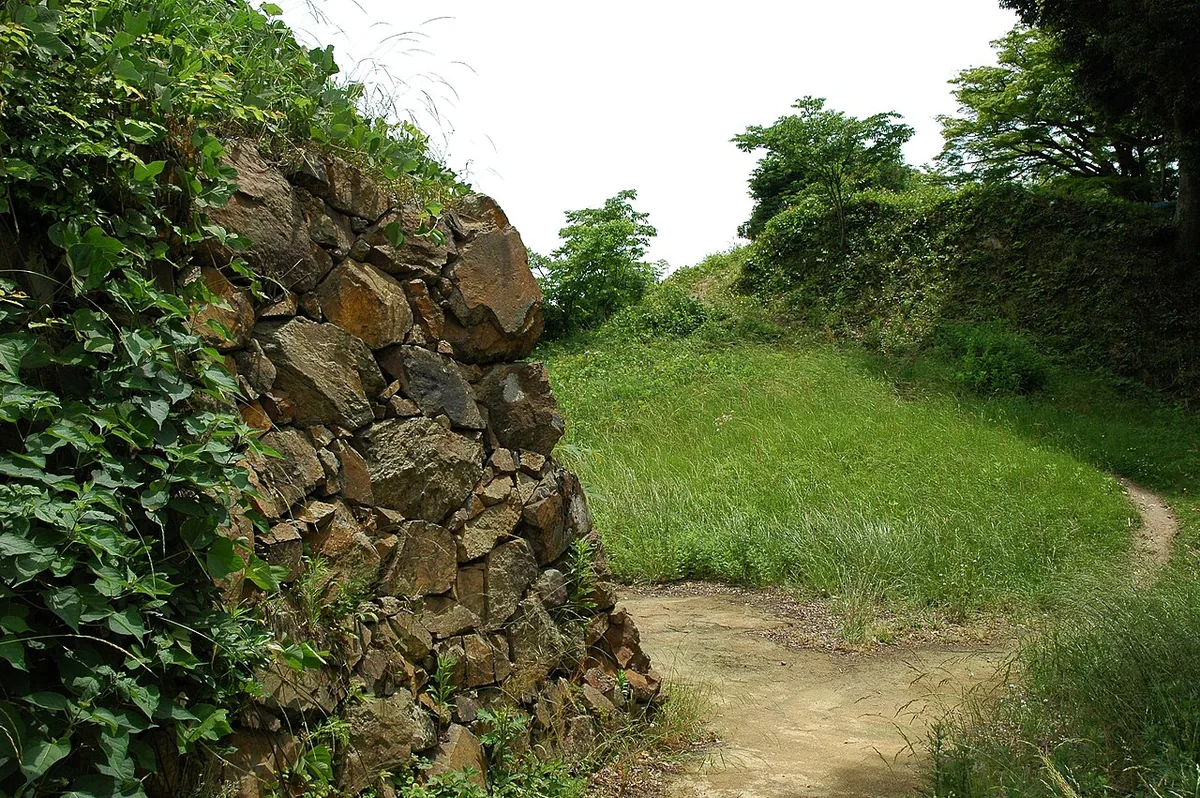
The fortress follows a type associated with ancient Korean-peninsula mountain defences, enclosing the upper slopes with roughly 2.8 kilometres of wall. Four gates and six water gates are known, with remains of buildings including storehouses inside. Its integrated system of rammed-earth walls, stonework and drainage differs markedly from castles of the Sengoku and Edo periods.
A CLOSER LOOK
Details worth a closer look.
The interpreted West Gate
The West Gate is a reconstruction based on an interpretation of archaeological evidence. It is not a surviving ancient building, but a way to explore the structure suggested by post remains and neighbouring features.
A wall around the mountain
About 2.8 kilometres of defences follow the mountain, using rammed earth and stonework. The key feature is the enclosure of a large hilltop area rather than any single building.
Water gates and drainage
Water gates allowed streams and runoff to pass through the defensive perimeter. They show that a fortress needed drainage as well as gates and walls against attackers.
THROUGH THE YEARS
A short timeline
- Later 7th century
The construction period suggested by archaeology.
- 1970
Stone alignments belonging to the defences attracted attention.
- 2004
An interpreted reconstruction of the West Gate was completed.
BEFORE YOU GO
A note before you go.
A short walk near the West Gate and a longer circuit along the walls require different amounts of time. Choose your walking range in advance, and enjoy the stories of the ogre Ura as legends distinct from archaeological evidence.
Information checked: 27 September 2026
Sources & official information
- Soja City: Kinojo Castle ↗
- Soja City: Kinojo West Gate ↗
- Soja City newsletter: investigation and conservation at Kinojo ↗
Some official sources are available in Japanese only.