Get to know the castle
Castle at a glance
- Site & layout
- Castle combining Shiroyama and a foothill residence
- Origins
- Construction began around 1601
- Builders & patrons
- Shimazu Iehisa
- Other names
- Tsurumaru Castle
- What remains today
- Walls, moat and stone bridge; Goromon Gate reconstructed 2020
THE STORY
The story behind the walls
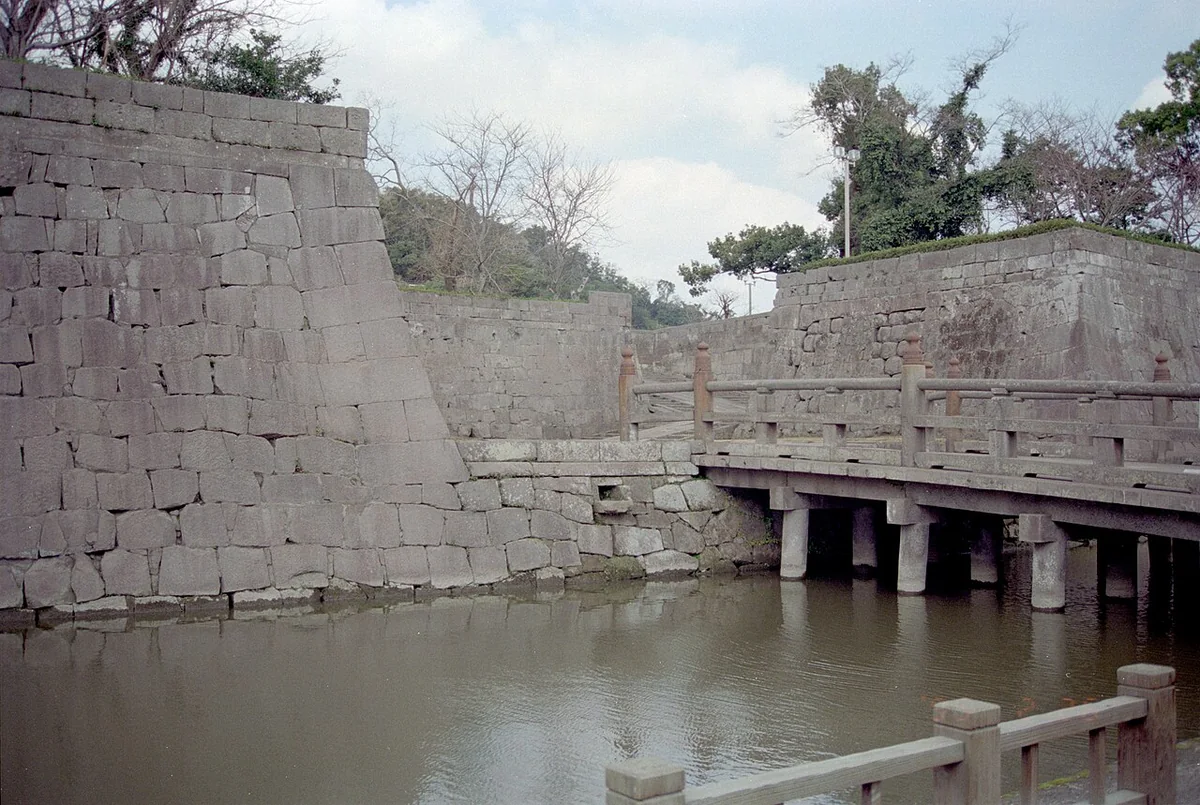
Shimazu Iehisa, the first lord of Satsuma Domain, began construction around 1601. The castle served as the lord’s residence and political centre. Records indicate that the bridge before Goromon Gate was changed from timber to stone in 1810. Major buildings were lost after the Edo period, but walls, moat and other remains survived. The gate was reconstructed in 2020 to restore an understanding of the castle’s frontage.
LAYOUT & ARCHITECTURE
Read the landscape and the buildings.
The castle had no keep, combining a foothill palace with Shiroyama behind it. A moat, walls and Goromon Gate formed the front, reached by a bridge. Old photographs and traces on foundation stones provided evidence for reconstructing the gate’s dimensions.
A CLOSER LOOK
Details worth a closer look.
Reconstructed Goromon Gate
The monumental gate was reconstructed in 2020. Its reconstruction used photographs and investigation of the surviving foundations.
Stone walls and moat
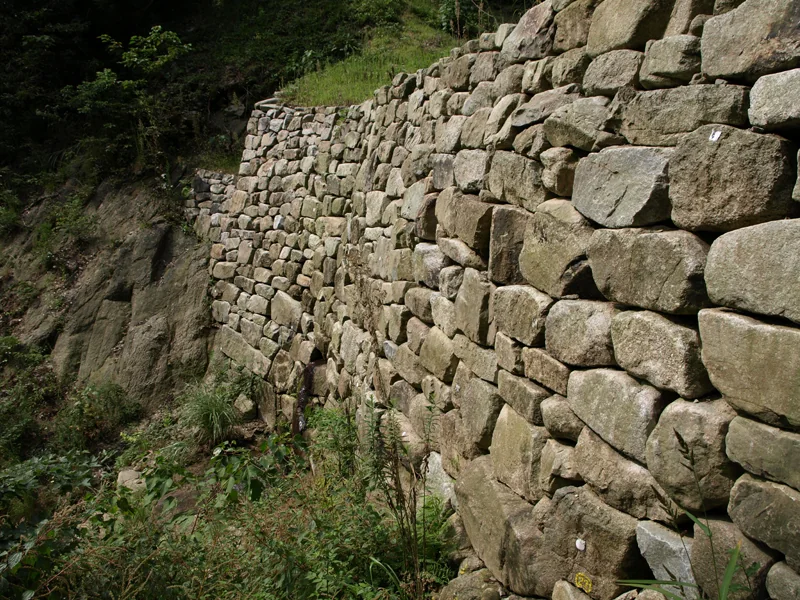
Surviving masonry preserves the defensive frontage. Together with the stone bridge, they explain the castle’s entrance arrangement.
Hill and foothill residence
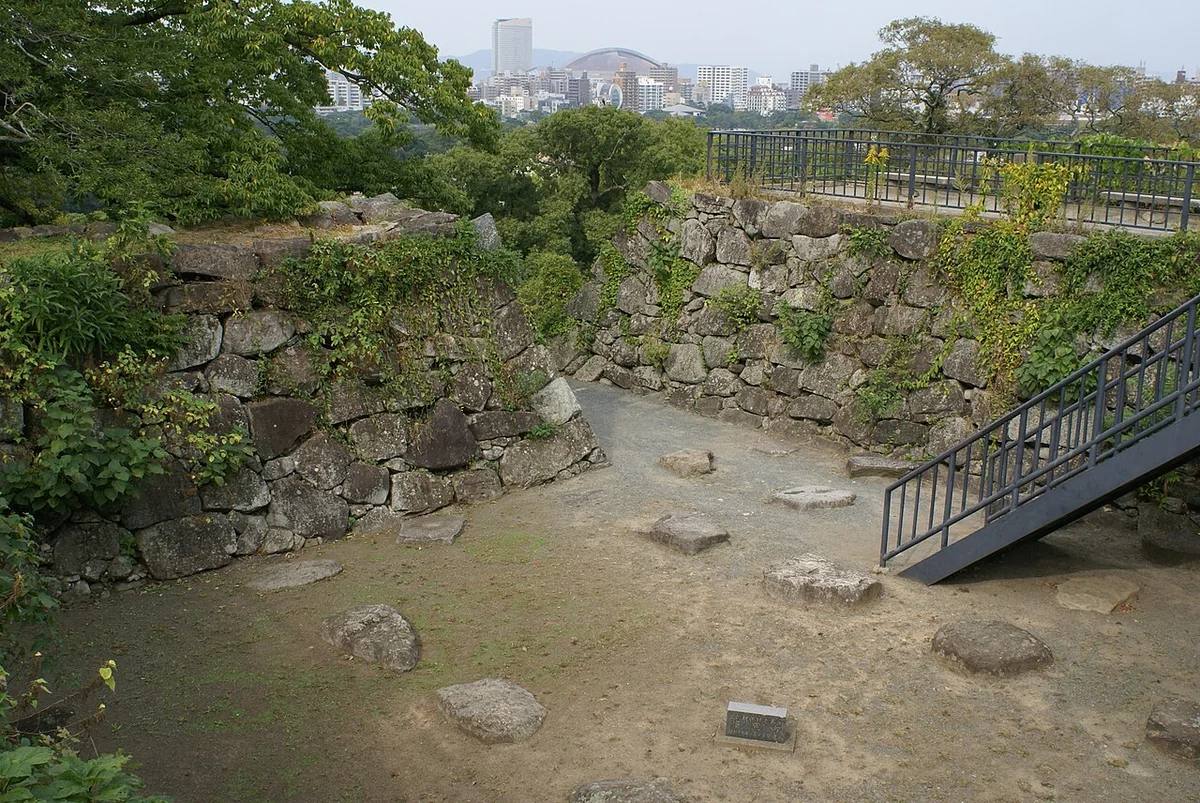
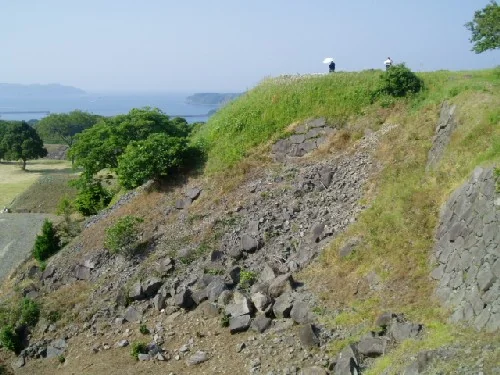
The site is understood through both Shiroyama behind it and the residence at its foot. The site shows how a castle could function through hill and residence without a keep.
THROUGH THE YEARS
A short timeline
- Around 1601
Shimazu Iehisa begins construction.
- 1810
The bridge before Goromon is replaced in stone.
- 2020
Goromon Gate is reconstructed.
BEFORE YOU GO
A note before you go.
The castle grounds and Reimeikan museum have different access arrangements. Check Kagoshima Prefecture’s information on visiting the site and nearby heritage.
Information checked: 27 September 2026
Sources & official information
- Kagoshima Prefecture: Castle overview ↗
- Kagoshima Prefecture: Gate and bridge interpretation panel ↗
- Kagoshima Prefecture: Completed Goromon reconstruction ↗
Some official sources are available in Japanese only.