Get to know the castle
Castle at a glance
- Site & layout
- Yayoi-period moated settlement
- Origins
- Developed in the Yayoi period; reconstructions mainly interpret the third century
- Builders & patrons
- The communities living at the site
- Other names
- Yoshinogari Archaeological Site
- What remains today
- Moat, dwelling and burial remains; buildings are research-based reconstructions
THE STORY
The story behind the walls
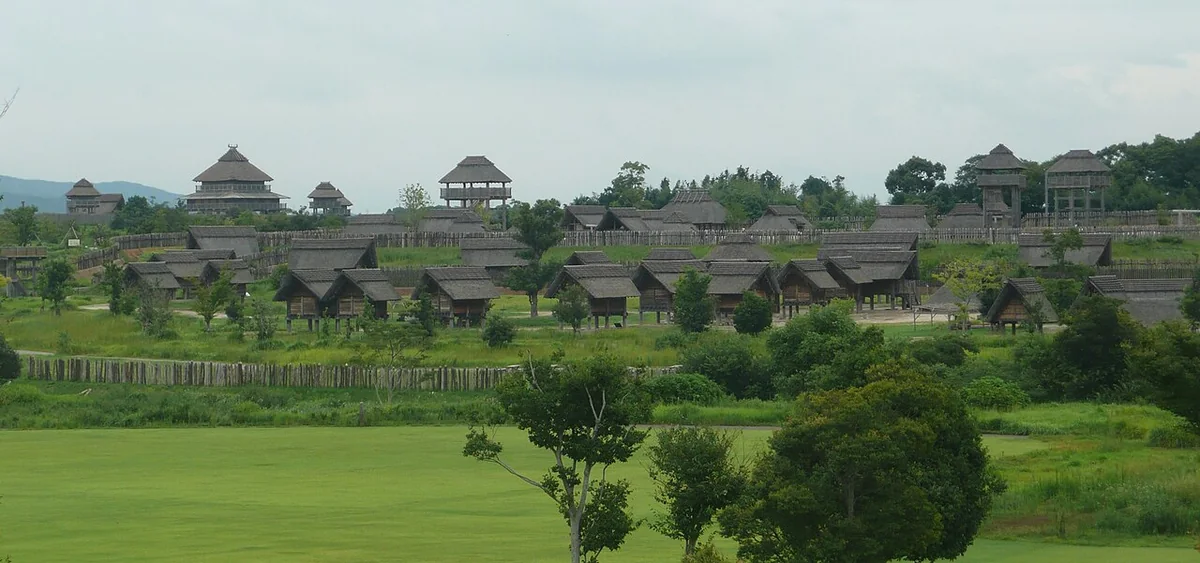
The settlement developed throughout the Yayoi period. A small community grew into a large moated centre. Excavations uncovered dwellings, storehouses and graves that provide evidence for daily life and social organisation. Reconstructed displays mainly interpret the late Yayoi settlement around the third century. Preserved remains such as the northern burial mound can be compared with reconstructed buildings to understand the whole site.
LAYOUT & ARCHITECTURE
Read the landscape and the buildings.
Moats enclosed the settlement, with distinct zones inside. Buildings in the northern and southern inner enclosures are reconstructed from excavated evidence such as postholes, combined with comparative research. Watchtowers and ceremonial halls express archaeological interpretations rather than surviving Yayoi buildings.
A CLOSER LOOK
Details worth a closer look.
Buildings of the southern inner enclosure
Watchtowers and pit dwellings illustrate everyday life and defence. Residential areas and elevated lookouts appear within the same settlement.
Ceremonial hall of the northern enclosure
Reconstruction presents an area interpreted as a centre of government and ritual. Its proposed functions include interpretations based on archaeological research.
Northern burial mound
Burial remains, including jar coffins, are preserved for display. Unlike the reconstructed buildings, this area presents excavated burial evidence.
THROUGH THE YEARS
A short timeline
- Early Yayoi period
Small communities occupy the area.
- Middle Yayoi period
Settlement and burial areas develop.
- Around the third century
The large settlement mainly represented by today’s reconstructions.
BEFORE YOU GO
A note before you go.
The park is extensive, so select the areas you want to explore on a map. Check opening information and prepare for outdoor weather.
Information checked: 27 September 2026
Sources & official information
Some official sources are available in Japanese only.