Get to know the castle
Castle at a glance
- Site & layout
- Coastal lowland castle with seawater moats
- Origins
- Construction began in 1588
- Builders & patrons
- Ikoma Chikamasa; later altered by the Matsudaira clan
- Other names
- Tamamo Castle
- What remains today
- Historic turrets and gates, walls and seawater moats; Hiunkaku dates to the Taisho period
THE STORY
The story behind the walls
Ikoma Chikamasa began building the castle in 1588 as a centre for ruling Sanuki. The Matsudaira clan later took over and made further alterations. Its coastal position and seawater moats defined the design. The keep was lost, while structures including Tsukimi Turret and Mizute Gate survived. Hiunkaku was built later in the Taisho period and is not the original Edo-period palace.
LAYOUT & ARCHITECTURE
Read the landscape and the buildings.
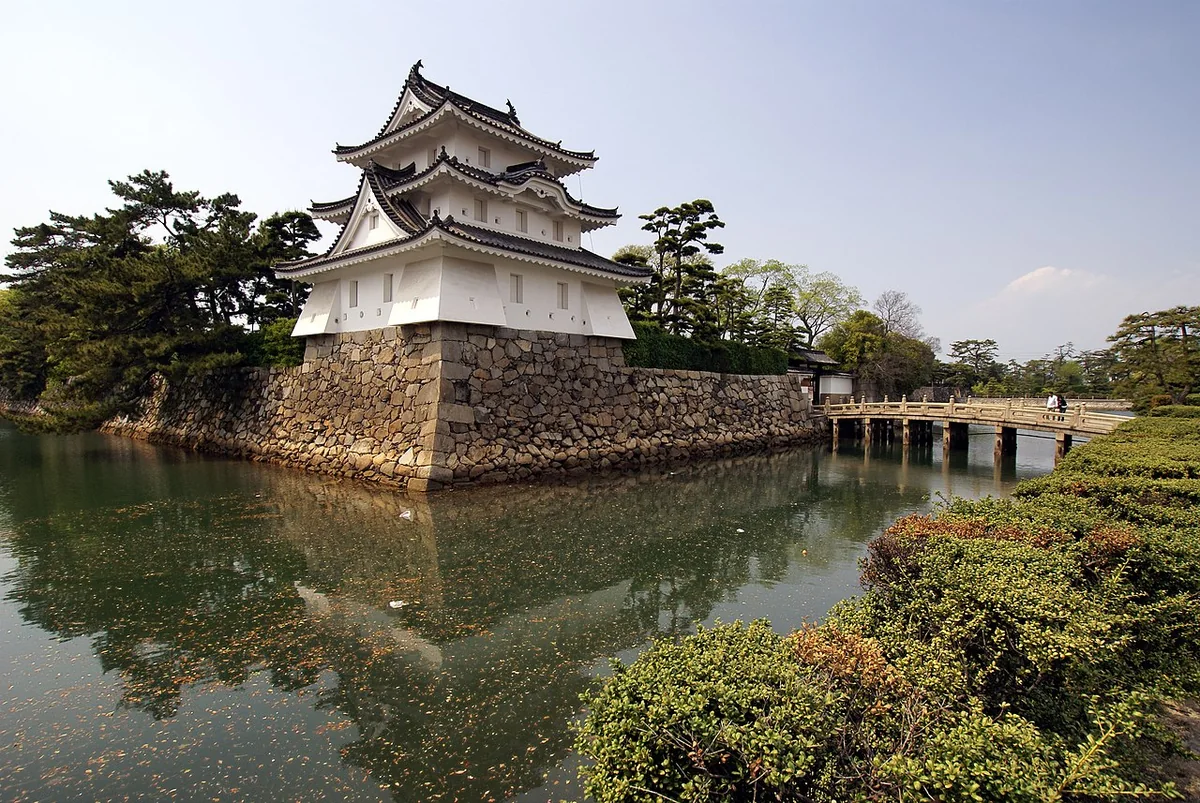
Built on flat coastal land, the castle used seawater in its defensive moats. Tsukimi Turret and Mizute Gate explain the relationship between the seaward entrance and lookout. In today’s park, castle remains can be distinguished from the later Hiunkaku residence.
A CLOSER LOOK
Details worth a closer look.
Saltwater moats
Moats connected to the sea are a defining feature of the castle. Walking beside the water reveals a different defensive approach from a mountain castle.
Tsukimi Turret and Mizute Gate
These surviving structures show how the castle faced the sea. Consider the approach from the sea to understand their positions.
Hiunkaku and its garden
The park includes the protected Hiunkaku residence and its nationally designated scenic garden. The site combines castle history with architecture and garden design from a later period.
THROUGH THE YEARS
A short timeline
- 1588
Ikoma Chikamasa begins construction.
- Edo period
The Matsudaira take over and alter the castle.
- Taisho period
The present Hiunkaku is built.
BEFORE YOU GO
A note before you go.
Interior access to the turrets and Hiunkaku varies. Check current visitor information before entering.
Information checked: 27 September 2026
Sources & official information
Some official sources are available in Japanese only.