Get to know the castle
Castle at a glance
- Site & layout
- Hill-and-plain castle on Mount Kameyama
- Origins
- Construction began 1597; surviving keep completed 1660
- Builders & patrons
- Ikoma, Yamazaki and Kyogoku clans
- Other names
- Kameyama Castle
- What remains today
- Edo-period keep, main gates and stone walls
THE STORY
The story behind the walls
The Ikoma clan began construction in 1597. After a period of abandonment, the Yamazaki clan rebuilt the stronghold. Under their successors, the Kyogoku clan, the present keep was completed in 1660. This wooden structure survives from the Edo period and is one of Japan’s twelve historic keeps. Alongside the gates and walls, it records work carried out across several periods.
LAYOUT & ARCHITECTURE
Read the landscape and the buildings.
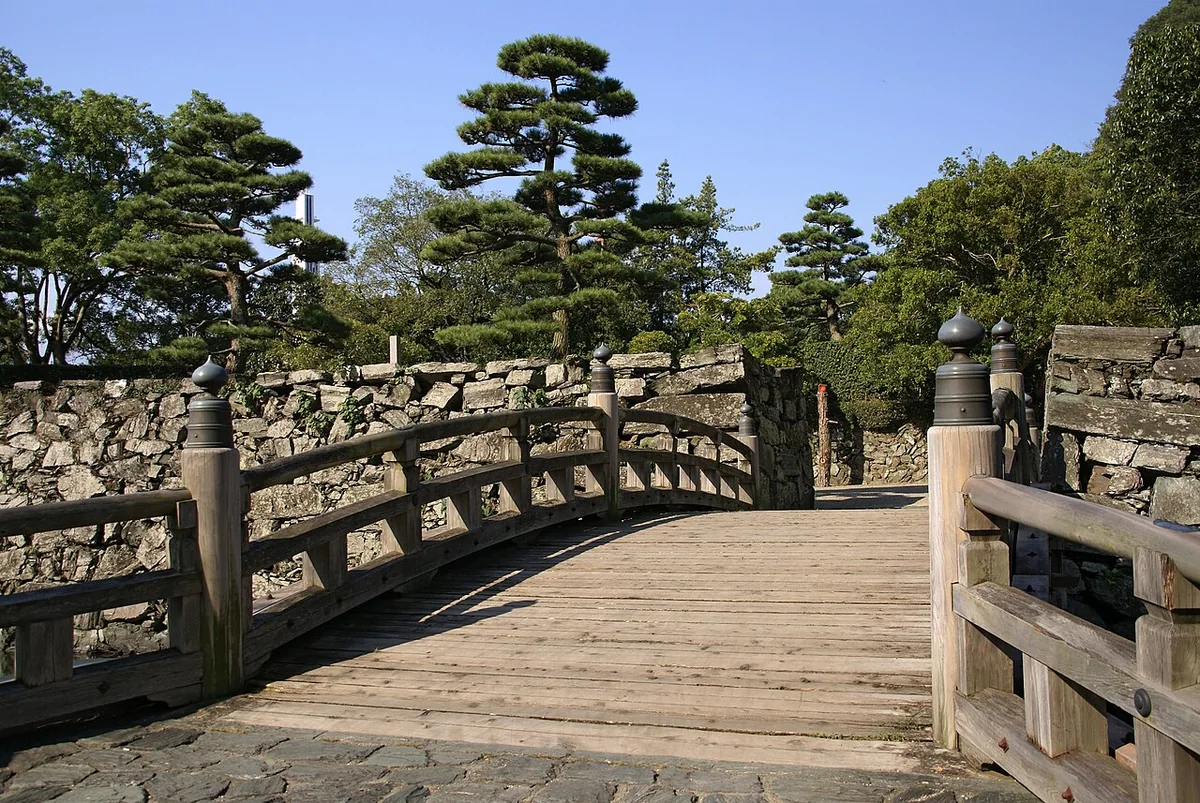
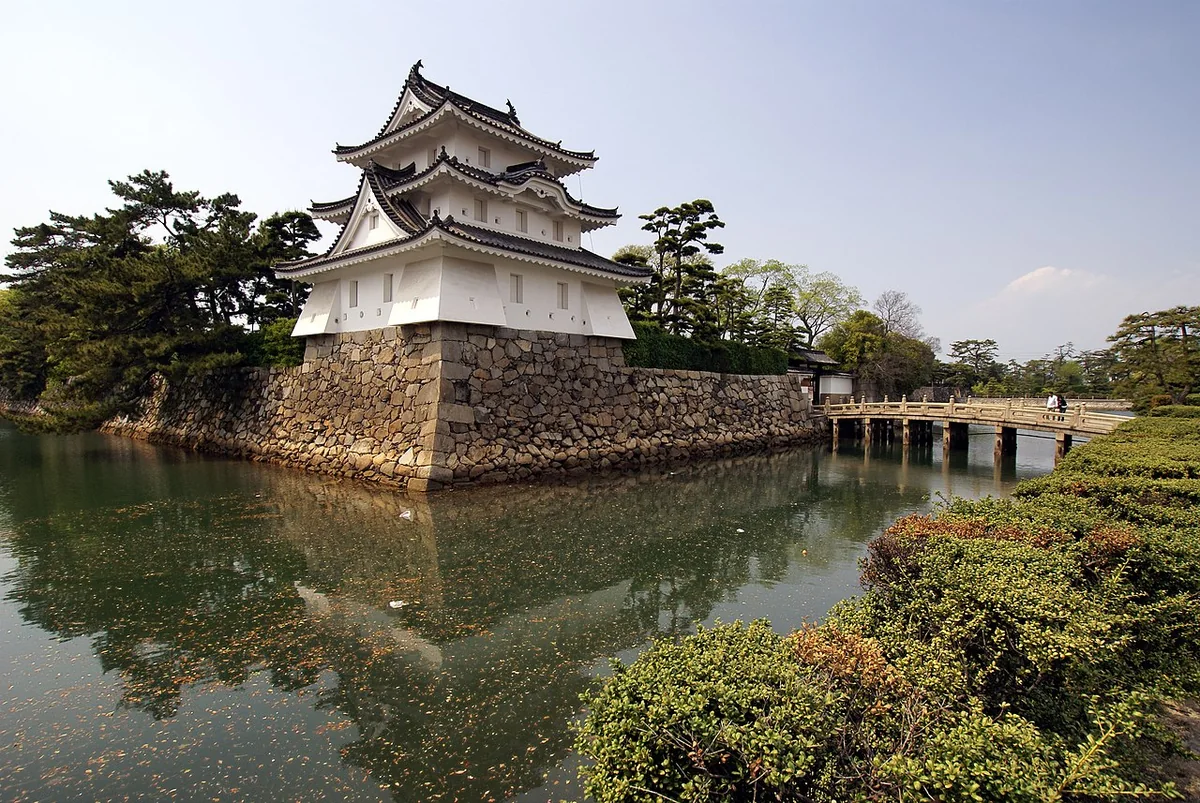
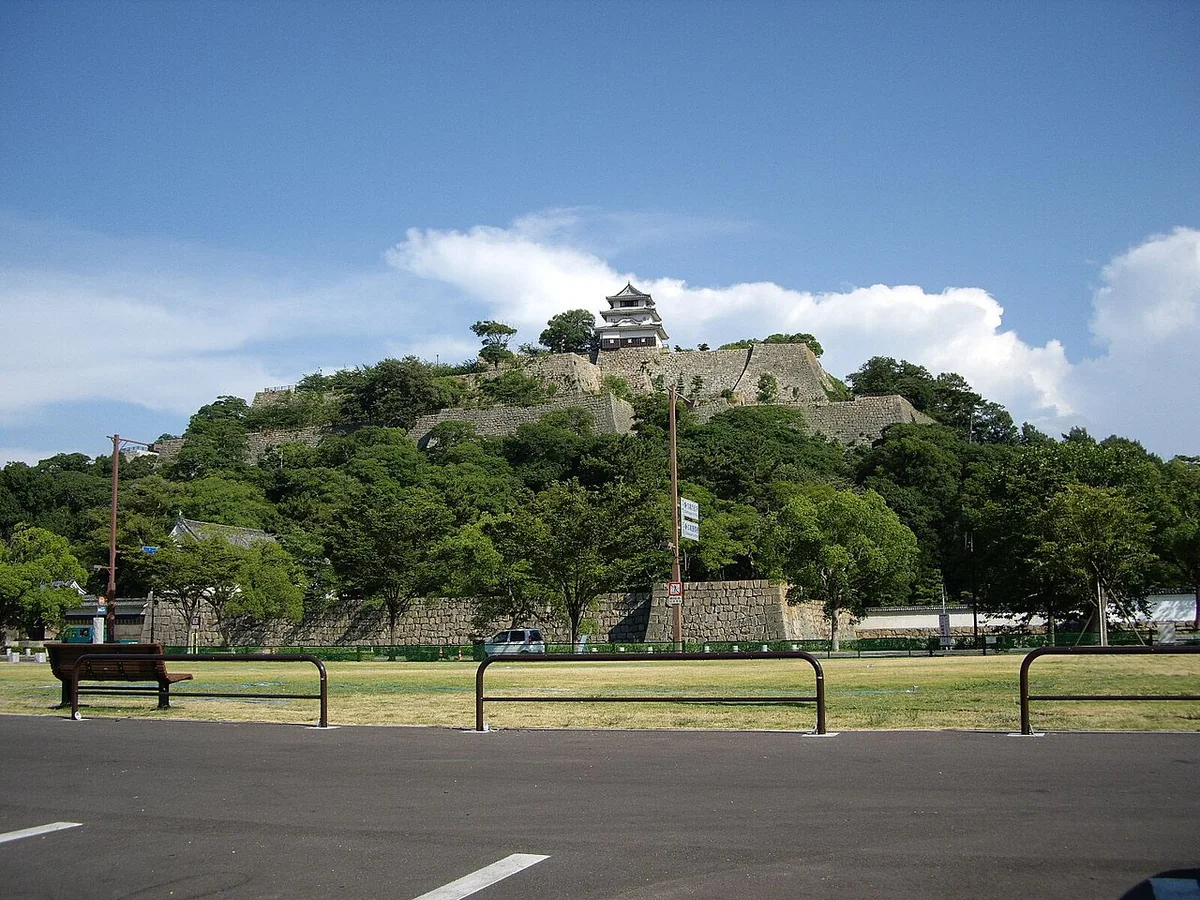
Enclosures and stone walls rise with the hill towards the main enclosure. On the north side of Sannomaru, tall walls visibly steepen as they rise. The contrast between compact keep and enormous masonry reveals the scale of the castle beyond its buildings.
A CLOSER LOOK
Details worth a closer look.
Surviving three-storey keep
Completed in 1660, this keep is one of Japan’s twelve surviving historic keeps. Its compact profile contrasts with the great walls beneath it.
Fan-shaped wall curves
The north side of Sannomaru has curving stone walls more than 20 metres high. Follow the changing angle from the broad base to the steep upper edge.
Mikaerizaka slope
This steep approach leads from the main gates towards the hilltop. Pausing along it makes the change in height between gates and keep apparent.
THROUGH THE YEARS
A short timeline
- 1597
The Ikoma begin construction.
- Seventeenth century
The Yamazaki rebuild after abandonment.
- 1660
The surviving keep is completed under the Kyogoku.
BEFORE YOU GO
A note before you go.
The approach includes steep slopes. Check official notices for any restrictions around wall restoration work.
Information checked: 27 September 2026
Sources & official information
Some official sources are available in Japanese only.