Get to know the castle
Castle at a glance
- Site & layout
- Mountain castle on a steep-sided plateau
- Origins
- Medieval origins; major Nakagawa rebuilding in 1594–1596
- Builders & patrons
- The Shiga clan and Nakagawa Hideshige and successors
- Other names
- —
- What remains today
- Enclosures, walls and gate remains; castle buildings are lost
THE STORY
The story behind the walls
Its earliest history includes tradition rather than a securely established foundation date. The Shiga clan held the medieval stronghold. Nakagawa Hideshige arrived in 1594 and undertook major rebuilding, completing the main enclosures by 1596. The castle remained the Nakagawa seat through the Edo period, but its buildings were dismantled in 1874. The preserved masonry site is also associated with composer Taki Rentaro, who played here as a boy.
LAYOUT & ARCHITECTURE
Read the landscape and the buildings.
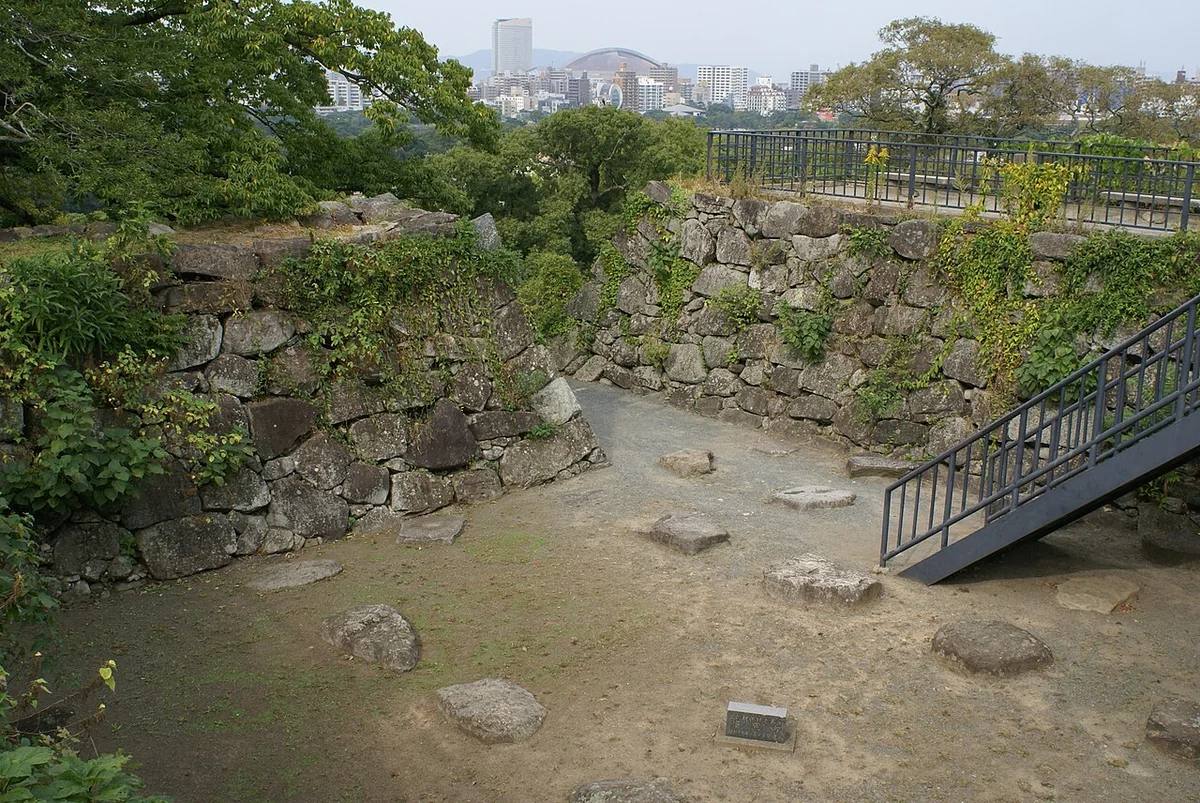
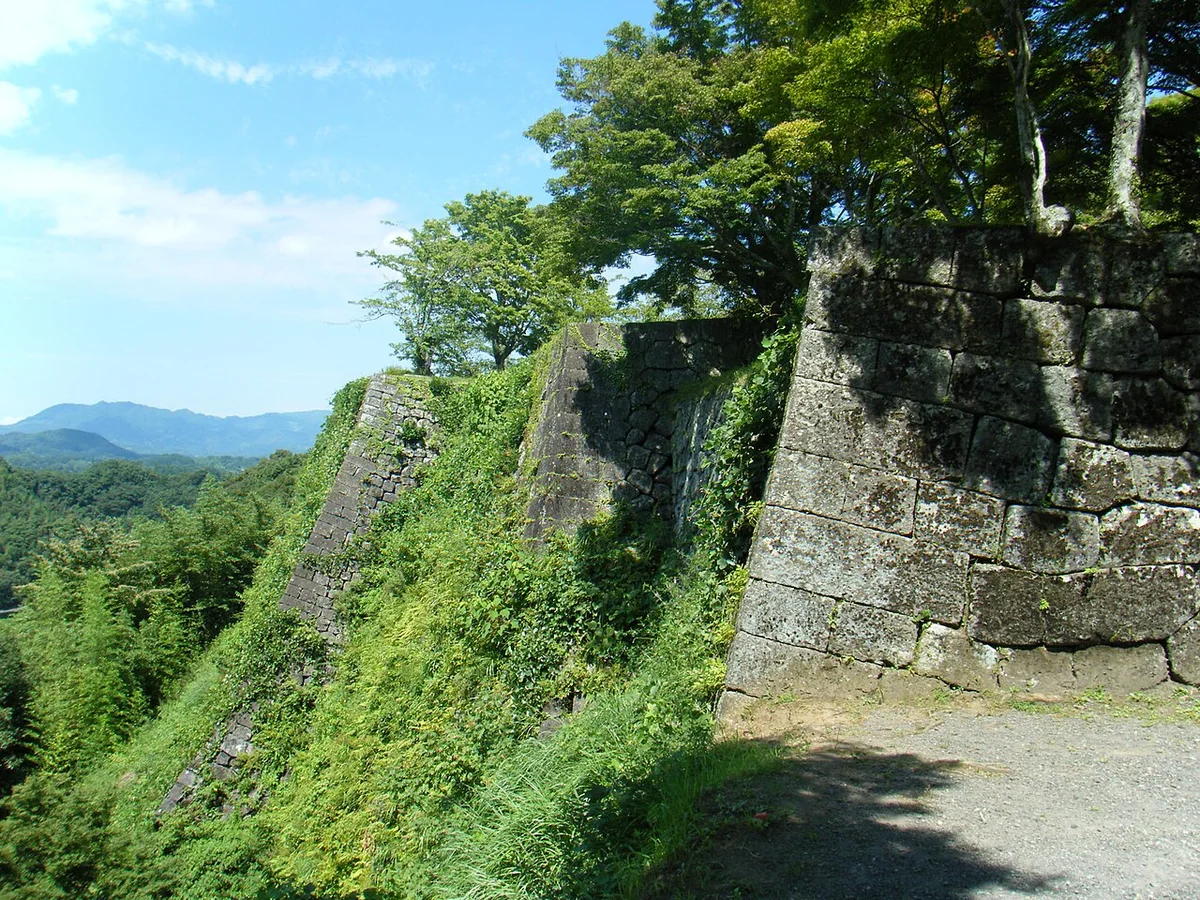
Enclosures extend across bedrock about 325 metres above sea level, using cliffs as defences. Nakagawa rebuilding developed the site into a fully stone-walled castle with its main enclosures and approaches. Today the exposed relationship between bedrock, masonry and terraces reveals where natural terrain was reshaped.
A CLOSER LOOK
Details worth a closer look.
Cliffs and masonry
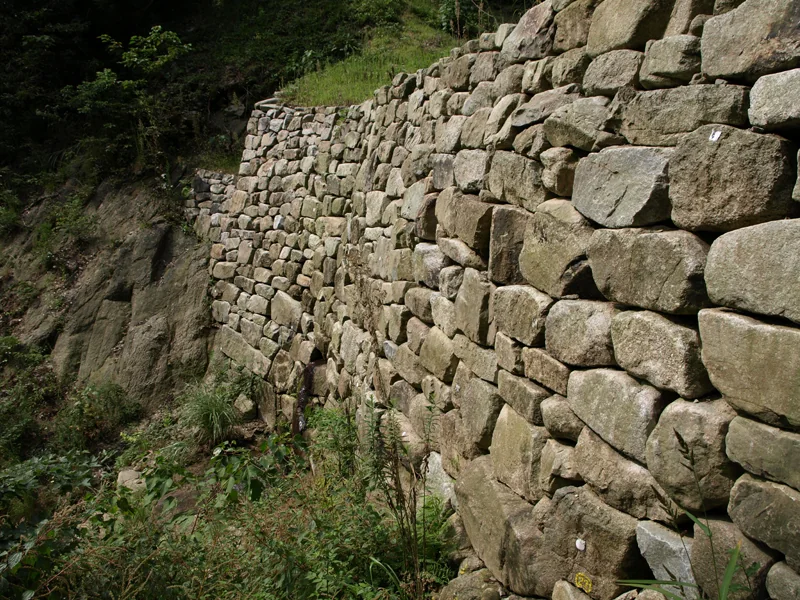
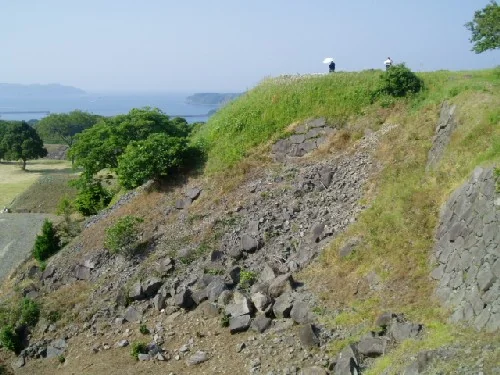
Volcanic bedrock and tall walls create the site’s steep profile. The continuity between natural slopes and built walls explains its defensive strength.
Linked enclosures
Several enclosures extend along the ridge. A map helps relate the core to areas such as the later-developed western enclosure.
Views towards the mountains
The castle site offers views towards the Aso and Kuju mountains. The broad outlook is inseparable from the castle’s elevated position.
THROUGH THE YEARS
A short timeline
- Medieval period
Develops as a Shiga stronghold.
- 1594–1596
Nakagawa Hideshige develops a fully stone-walled castle.
- 1874
The castle buildings are dismantled.
BEFORE YOU GO
A note before you go.
This outdoor site includes slopes and cliffs. Follow the official map and choose a route suited to the weather and footing.
Information checked: 27 September 2026
Sources & official information
Some official sources are available in Japanese only.