Get to know the castle
Castle at a glance
- Site & layout
- Flatland castle with surviving palace architecture
- Origins
- Built 1603; major enlargement in 1626
- Builders & patrons
- Tokugawa Ieyasu, Hidetada, Iemitsu and others
- Other names
- Former Imperial Villa Nijo Castle
- What remains today
- Ninomaru Palace, gates, turrets, gardens and keep platform; relocated Honmaru Palace
THE STORY
The story behind the walls
Built in 1603, Nijo served as the shogun’s base in Kyoto. It was greatly enlarged and remodelled for Emperor Go-Mizunoo’s visit in 1626. It later became associated with the return of governing authority to the imperial court at the end of the shogunate. During the Meiji period it served as an imperial villa, and buildings from the Katsura household were moved into the inner precinct. These layers explain its mixture of samurai and imperial architecture.
LAYOUT & ARCHITECTURE
Read the landscape and the buildings.
Outer and inner moats divide the flat site, with gates controlling access to the palaces. Ninomaru’s staggered plan reflects rank and formal audience procedures. The empty keep platform contrasts with palaces and gardens that still explain the castle’s political and ceremonial role.
A CLOSER LOOK
Details worth a closer look.
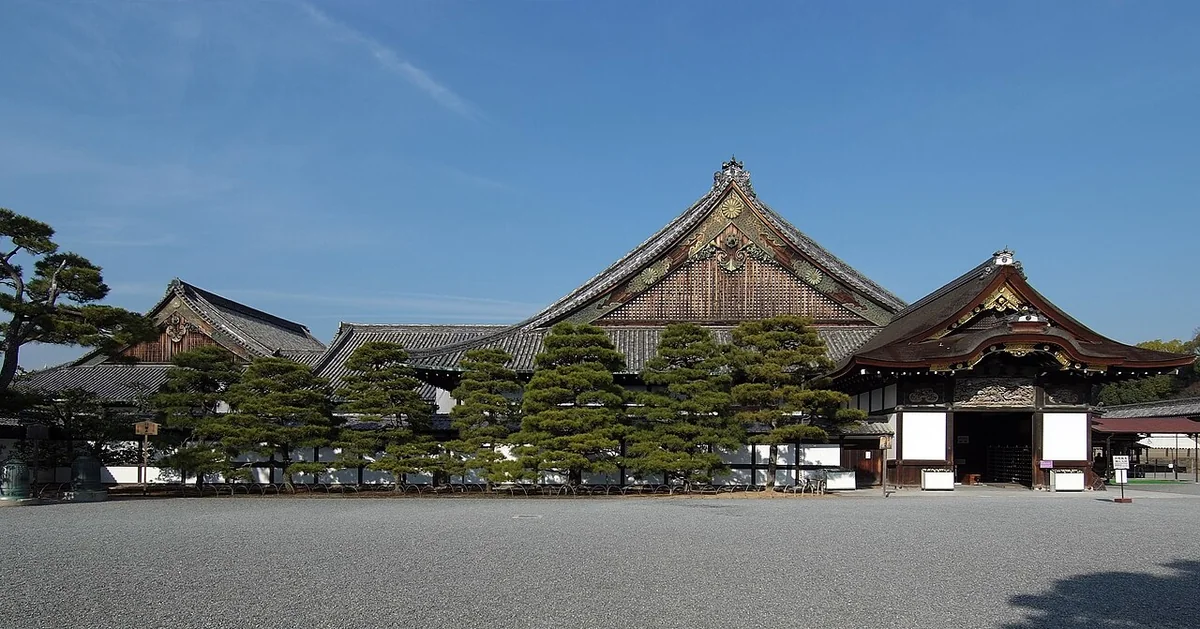
Ninomaru Palace
Six connected buildings form a staggered palace plan. Room functions and painted subjects together explain how the shogun’s formal surroundings were organised.
Karamon gate and garden
Painted carvings decorate the Karamon gate. Beyond it, the palace and pond garden form a sequence expressing authority and artistic taste.
Honmaru Palace
The present Honmaru Palace was moved from the Katsura imperial household in the Meiji period. Reopened in 2024, it represents a different architectural history from Ninomaru.
THROUGH THE YEARS
A short timeline
- 1603
Built as the Tokugawa shogunate’s Kyoto castle.
- 1626
Enlarged and remodelled for an imperial visit.
- 2024
Honmaru Palace reopened after conservation work.
BEFORE YOU GO
A note before you go.
Admission to the grounds and individual palaces may be separate. Read the official booking and visiting arrangements if you wish to include Honmaru Palace.
Information checked: 27 September 2026
Sources & official information
- Nijo Castle: Cultural properties and facilities ↗
- Nijo Castle: Honmaru Palace and garden ↗
- Kyoto City: Nijo Castle history ↗
Some official sources are available in Japanese only.