Get to know the castle
Castle at a glance
- Site & layout
- Mountain castle
- Origins
- Foundation uncertain; major development in the 1530s–1550s
- Builders & patrons
- The Sasaki Rokkaku family
- Other names
- Sasaki Castle
- What remains today
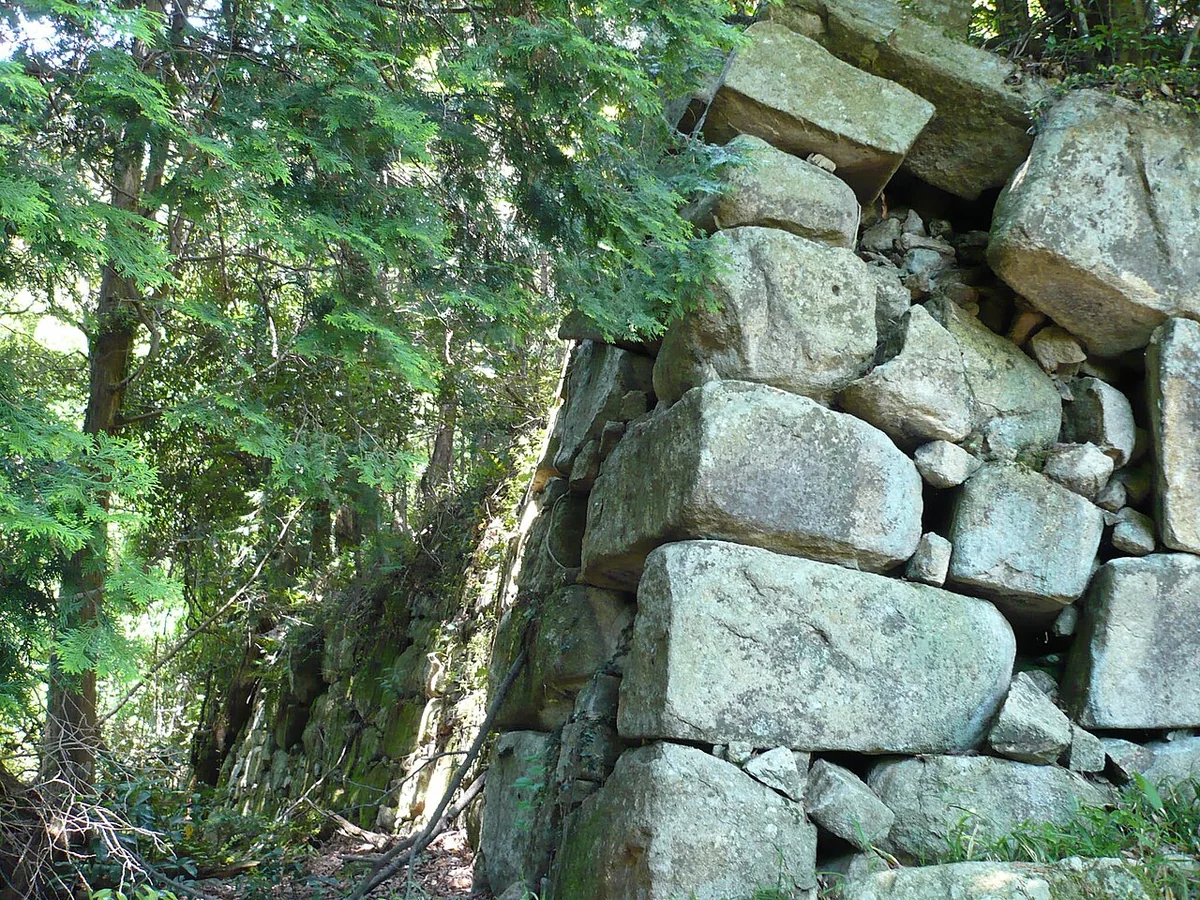
- Walls, terraces, steps and drainage remains
THE STORY
The story behind the walls
The site appears in records from the 14th century, but its precise foundation is uncertain. The Rokkaku are thought to have developed the stone-built residential castle during the 1530s–1550s. They withdrew before Nobunaga’s advance in 1568. Fire traces remain difficult to date, and the castle seems to have lost its role by the completion of Azuchi in 1579.
LAYOUT & ARCHITECTURE
Read the landscape and the buildings.
Numerous terraces spread down the southern slope from the summit. Major enclosures use roughly rectangular plans and substantial stone boundaries, with evidence of residential use. Some features remain difficult to explain through defence alone.
A CLOSER LOOK
Details worth a closer look.
Stone-enclosed terraces
Large stones enclose terraces traditionally called the main enclosure and Hirai-maru. Their extensive use is a notable feature of this Warring States castle.
Life on the mountain
Excavation has recovered tea utensils and ceramics. The mountain was a place of hospitality and cultured life as well as defence.
Temple and castle remains
The name derives from Kannonshoji Temple on the mountain. Not every terrace can confidently be assigned to the castle; the relationship with temple remains is still studied.
THROUGH THE YEARS
A short timeline
- 1530s–1550s
Thought to have developed into a stone-built residential stronghold.
- 1568
The Rokkaku withdrew before Nobunaga’s advance.
- 1579
The castle appears to have lost its role with Azuchi’s completion.
BEFORE YOU GO
A note before you go.
Plan the temple approach and castle trails separately. The site is extensive; use a map and view the walls from established paths.
Information checked: 27 September 2026
Sources & official information
Some official sources are available in Japanese only.