Get to know the castle
Castle at a glance
- Site & layout
- Flatland coastal castle
- Origins
- Begun 1648; completed 1661
- Builders & patrons
- Asano Naganao
- Other names
- Kariya Castle and other names
- What remains today
- Walls, moats and unused keep platform; reconstructed gates, gardens and palace footprint
THE STORY
The story behind the walls
Asano Naganao built the present castle between 1648 and 1661. Although a keep platform was prepared, no keep was constructed. Later Nagai and Mori rulers used the castle and modified its gardens. Modern excavation and conservation now interpret gates, gardens and the palace plan.
LAYOUT & ARCHITECTURE
Read the landscape and the buildings.
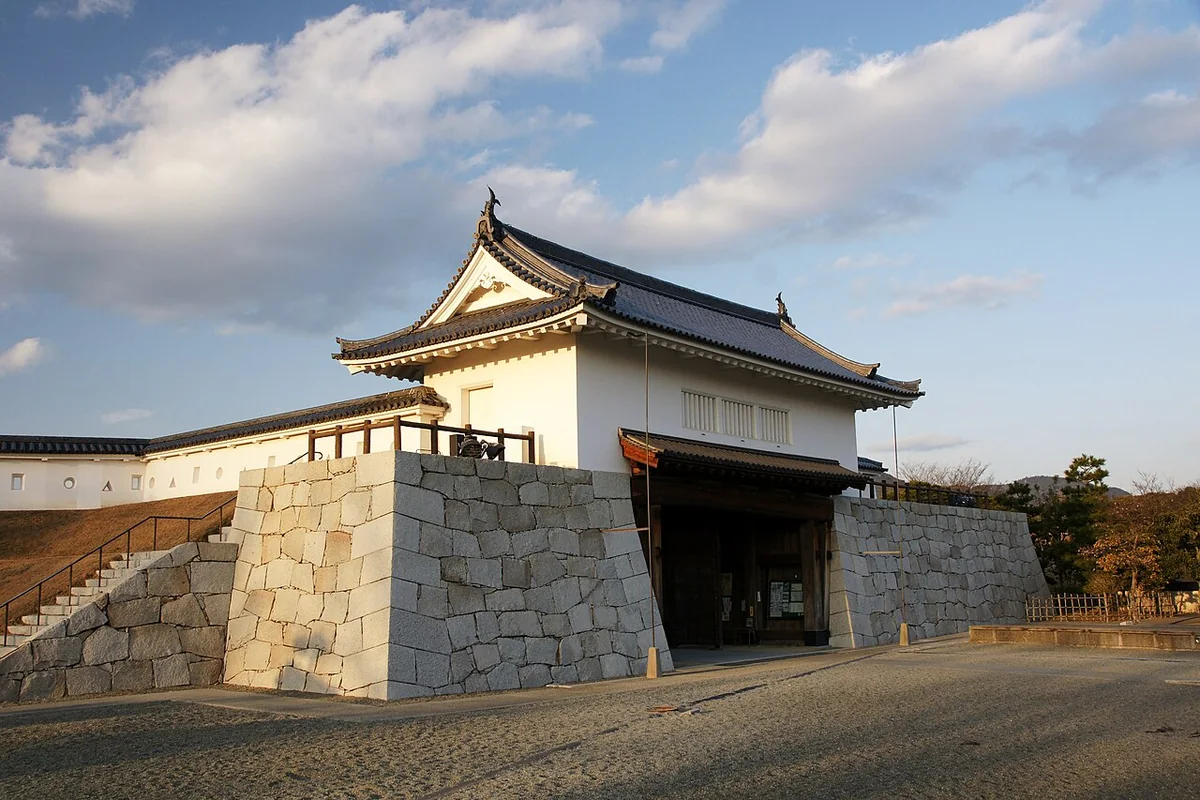
Moats divided the main, second and outer enclosures of this coastal flatland castle. Gate courts and projecting walls enabled flanking defence. Gardens add a different perspective, showing the domestic and social life within the fortress.
A CLOSER LOOK
Details worth a closer look.
Angled stone defences
Projections and recesses allowed defenders to cover approaches from the side. Following the walls across the moat reveals a more complex plan than a simple rectangle.
The palace footprint
A full-scale layout marks the lord’s palace in the main enclosure. Walking it gives a sense of room sizes despite the absence of the building.
Conserved and restored gardens
The main and second-enclosure gardens have been conserved using archaeological findings. Their ponds and islands reveal spaces for elite leisure and hospitality.
THROUGH THE YEARS
A short timeline
- 1648
Asano Naganao began construction.
- 1661
Ako Castle was completed.
- 2002
The main and second-enclosure gardens became nationally designated scenic sites.
BEFORE YOU GO
A note before you go.
There is no keep on the platform. Check access to gates and gardens and distinguish reconstructed buildings from archaeological remains as you explore.
Information checked: 27 September 2026
Sources & official information
- Ako Castle Digital Museum: Construction history ↗
- Ako Castle Digital Museum: Castle layout ↗
- Ako City Board of Education: Castle history ↗
Some official sources are available in Japanese only.